Wakame
Place the wakame in a measuring cup with four times its volume of water. Microwave for 10 seconds. Check hydration and leave in water longer if needed.
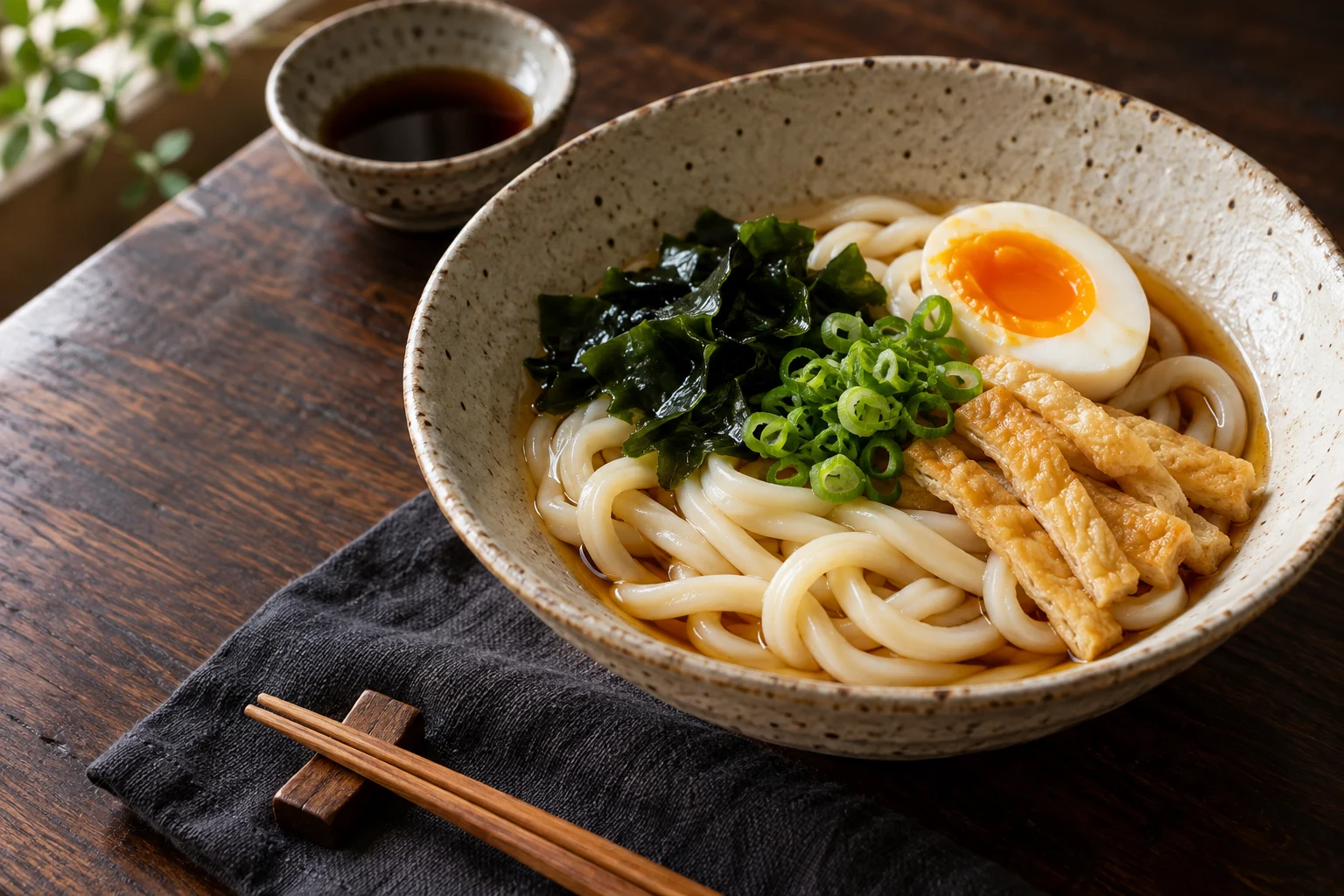
Boil frozen udon, then rinse it under cold water. That’s the foundation of today’s bowl. Choose a sauce, from refreshing and light to rich and full of flavor.
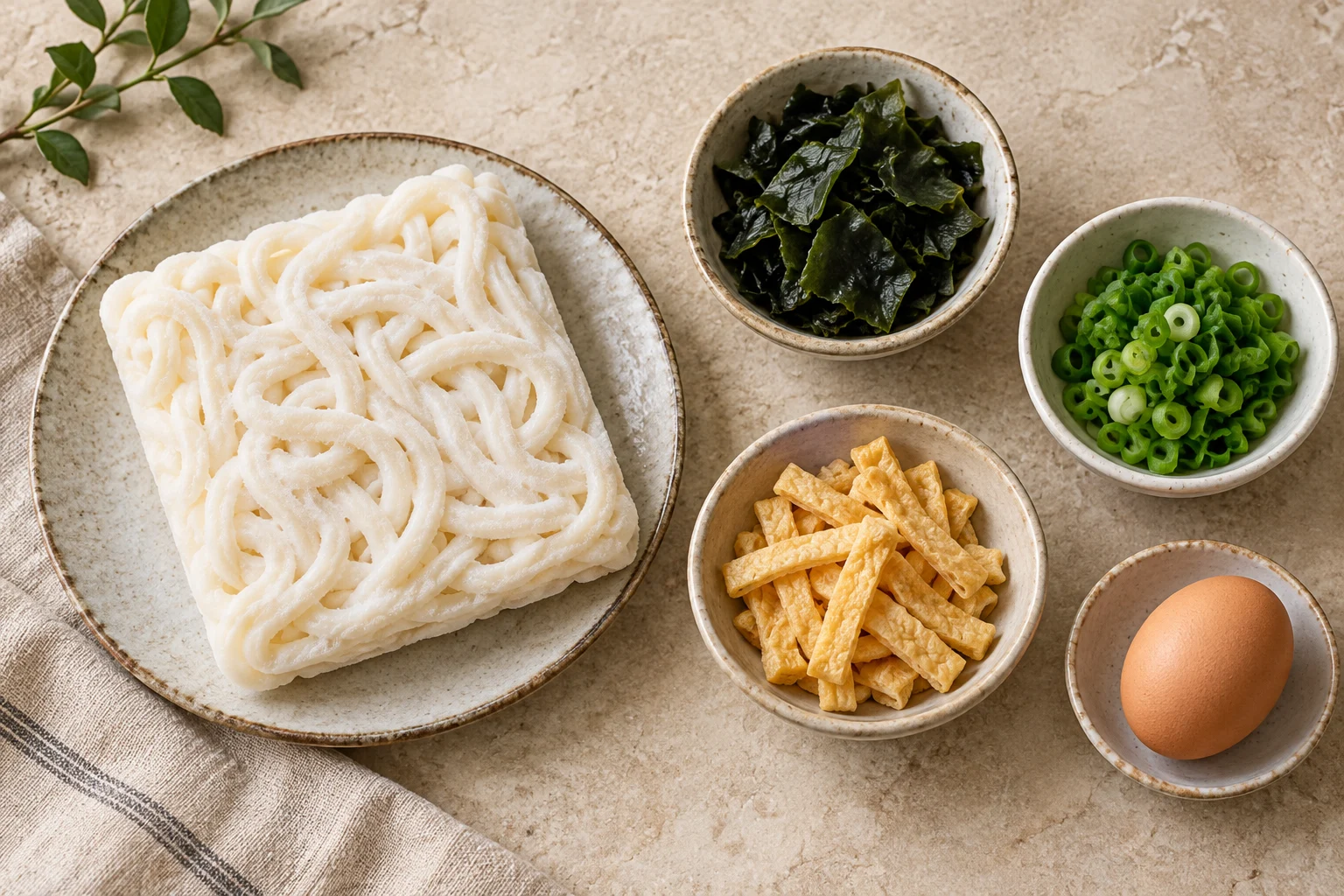
Fill a small saucepan about 80% full with water. Bring to a boil over high heat.
Add one portion of frozen udon. Leave it until the water is about to return to a boil.
Just before boiling, stir gently with chopsticks. As soon as it boils, drain through a colander.
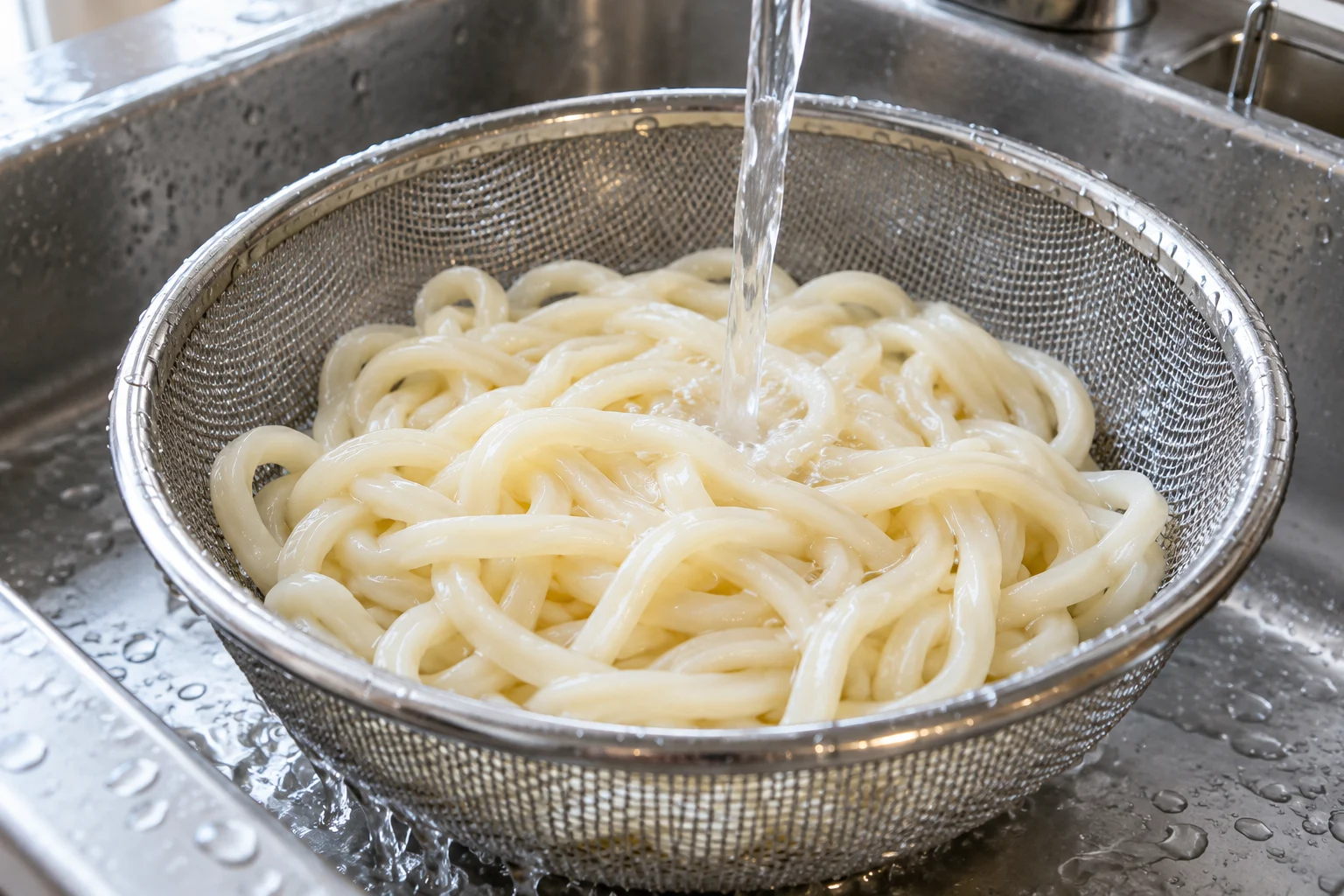
Run cold water through the colander. Gently rub the noodles to remove surface starch and heat, for about 20 seconds.
Put the noodles in a bowl with your chosen sauce and prepared toppings.
Also check the heating instructions on your frozen udon package.
Place the wakame in a measuring cup with four times its volume of water. Microwave for 10 seconds. Check hydration and leave in water longer if needed.
Use frozen chopped scallions as they are. If uncut, simply wash and chop.
Use the sliced fried tofu as it is.
The same noodles. A completely different bowl.
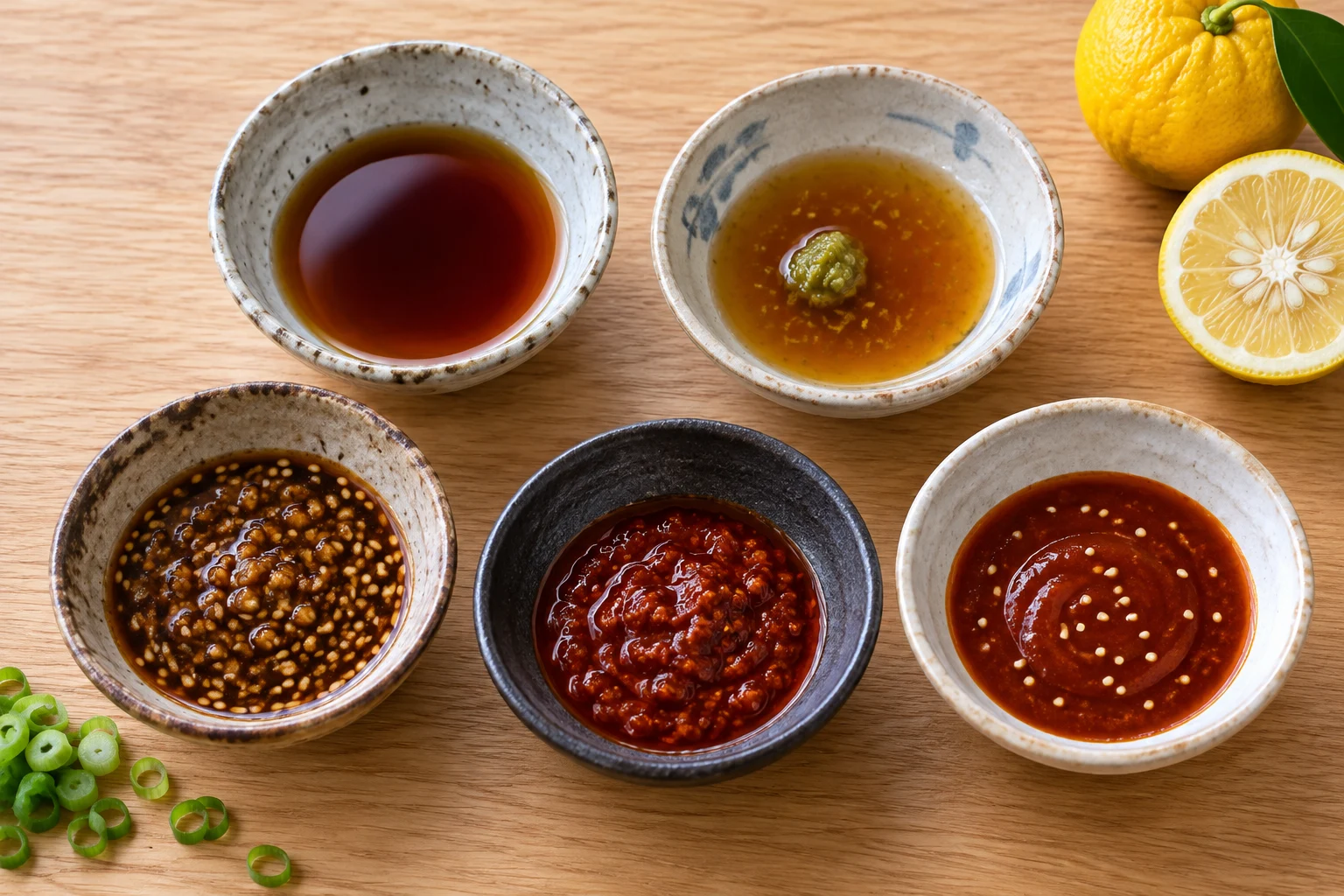
The numbers are ratios by volume. Use the same spoon for each ingredient, then adjust to taste.
For yuzu kosho and chili oil, use 0.3–1 part to taste. Start with less.
Add sansho or yuzu kosho to taste.
Yuzu ponzu and onion-flavored Japanese dressing work especially well.
Daisho barbecue sauce with sesame is a good choice. Onion-flavored Japanese dressing is even better.
Soy sauce plus vinegar can replace ponzu. Daisho barbecue sauce is the author’s favorite.
Adjust the acidity, sweetness and heat to taste.
When adding egg, a little more doubanjiang or tianmianjiang makes it even tastier.
Photos are AI-generated illustrations of cooking and serving ideas.
← Home